Standalone Off-Grid Solar Design: Sizing Manual
Designing a standalone off-grid photovoltaic power system is fundamentally different from designing a grid-tied residential installation. In a grid-tied home, the electrical utility grid serves as an infinite safety net: if your solar panels produce too little electricity, the grid seamlessly makes up the deficit.
In an off-grid cabin, remote homestead, or mobile RV, there is no safety net. Every single watt-hour of energy consumed by your water pump, refrigerator, lighting, and communications equipment must be captured by your solar panels, stored inside your chemical battery bank, and inverted to clean AC power without tripping breaker protection.
If you oversize an off-grid system, you waste thousands of dollars on excess lithium cells; if you undersize it, you will suffer dead batteries, spoiled food, frozen pipes, and generator exhaust fumes in the middle of a winter blizzard.
This engineering manual guides you through the exact 5-step mathematical methodology required to build a rock-solid, zero-compromise off-grid clean energy system.

Figure 1: Standalone off-grid solar installation delivering autonomous power to a remote residential cabin.
1. Step 1: Conduct a Granular Watt-Hour Load Audit
In a grid-tied home, sizing starts with your monthly utility bill. In an off-grid system, you don’t have a utility bill. You must build your energy baseline appliance-by-appliance.
Energy consumption is calculated in Watt-Hours (Wh):
Daily Energy (Wh) = Appliance Wattage (Watts) × Hours Run Per DayOff-Grid Cabin Daily Load Worksheet Example:
- Energy Star Refrigerator:
100W × 8 hrs (duty cycle) = 800 Wh - Well Pump (1/2 HP):
750W × 1.2 hrs = 900 Wh - Starlink Satellite Internet:
45W × 18 hrs = 810 Wh - LED Interior Lighting (8 bulbs):
60W total × 5 hrs = 300 Wh - Laptops & Device Charging:
120W × 4 hrs = 480 Wh - Kitchen Microwave / Coffee Maker:
1,200W × 0.3 hrs (18 mins) = 360 Wh - Ceiling Ventilation Fans:
40W × 10 hrs = 400 Wh
Subtotal Raw Consumption = 4,050 Wh/dayFactoring in Inverter Inefficiency:
Pure sine wave inverters operate at approximately 90% to 93% conversion efficiency. To deliver 4,050 Wh of AC power, the DC battery bank must supply:
Total Daily DC Demand = (4,050 Wh) / (0.92) ≈ 4,402 Wh per day (4.40 kWh)2. Step 2: Size the Battery Bank with Days of Autonomy
The battery bank is the heart of an off-grid system. Sizing depends on your target Days of Autonomy—the number of consecutive sunless, rainy, or snow-covered days your home can run before the battery reaches its safe discharge floor.
Battery Capacity (Wh) = (Daily DC Demand (Wh) × Days of Autonomy) / (Depth of Discharge (DoD))- Recommended Days of Autonomy:
- Weekend Cabin:
1.5 to 2.0 Days - Full-Time Homestead (with backup generator):
2.0 to 2.5 Days - Critical Remote Site (no generator access):
3.0 to 4.0 Days
- Weekend Cabin:
Sizing for Our Example (2.0 Days Autonomy):
Using modern Lithium Iron Phosphate (LiFePO4) cells with a safe 90% Depth of Discharge:
Required Battery Capacity = (4,402 Wh × 2.0 Days) / (0.90 DoD) = (8,804) / (0.90) = 9,782 Wh (9.78 kWh)In practice, this calls for two standard 5.12 kWh 48V server-rack lithium batteries connected in parallel (10.24 kWh total).
Complete Off-Grid DC & AC Electrical Architecture
How solar panels, MPPT charge controllers, lithium storage, inverter/chargers, and backup generators interconnect:
Figure 2: Complete off-grid single-line diagram with integrated auto-starting generator backup.

Figure 3: 48V Lithium Iron Phosphate (LiFePO4) server-rack battery bank configured for off-grid autonomous energy storage.
3. Step 3: Size the Solar Panel Array for Winter Solstice
In a grid-tied system, you size for the annual average solar irradiance. In an off-grid system, you must size for the worst month of the year (December / January).
If your system only produces enough power during sunny June, you will spend your entire winter listening to a noisy gasoline generator.
Required Solar Array (kW DC) = (Daily DC Demand (kWh)) / (Worst-Month Winter PSH × Derate Factor (0.78))Notice that the derate factor drops to 0.78 for off-grid systems to account for additional charge controller losses, battery chemical resistance, and cold winter solar collection angles.
Winter Sizing Calculation:
- Daily Demand:
4.40 kWh - Winter Peak Sun Hours (Moderate Zone):
2.6 PSH(compared to5.2 PSHin June) - Derate Factor: 0.78
Array Capacity = (4.40 kWh) / (2.6 PSH × 0.78) = (4.40) / (2.028) = 2.17 kW DC (2,170 Watts)- Panel Quantity:
2,170W ÷ 400W = 5.4 → 6 Panels of 400W each(2.40 kW DC).
4. Step 4: Sizing the MPPT Charge Controller
Maximum Power Point Tracking (MPPT) charge controllers extract up to 30% more energy than obsolete Pulse Width Modulation (PWM) controllers by converting high-voltage array power down to battery charging voltage.
MPPT controllers are rated by two primary specifications:
- Maximum Open-Circuit Voltage (Voc): Must never be exceeded, especially in freezing weather when panel voltage naturally rises. Add a 15% cold-weather voltage margin.
- Maximum Continuous Output Amperes (Imax): The maximum current the controller can safely deliver into the 48V battery bank.
MPPT Output Current (Amps) = (Array Wattage (Watts)) / (Battery Charging Voltage (54V)) × 1.25Amperage = (2,400W) / (54V) × 1.25 = 44.4 × 1.25 ≈ 55.5 AmpsRecommendation: Select a 60-Amp or 80-Amp MPPT controller with a 150V or 250V maximum input rating (such as a Victron SmartSolar or MidNite Solar Classic).
5. Split-Phase 120V/240V Sizing & Well Pump Surge Currents
One of the most common points of failure in off-grid homestead design is underestimating inductive motor start-up surges.
Household appliances with electric motors—such as deep well submersible water pumps, air compressors, refrigeration compressors, and power tools—require an enormous spike of current to break rotational inertia from a dead stop. This instantaneous draw is termed Locked Rotor Amps (LRA).
Starting Surge Wattage = Running Wattage × (4 to 7)The Well Pump Inrush Challenge:
- A standard 3/4 Horsepower (HP) 240V submersible well pump draws approximately
900 to 1,100 Wattswhile running continuously. - During the initial 150 to 300 milliseconds of start-up, however, its inductive motor draws an instantaneous surge of 4,500 to 7,000 Watts.
- If your off-grid inverter is only rated for
3,000W continuousand lacks high-surge transformer capacity, the well pump kicking on will instantly trip the inverter’s overload breaker, plunging your cabin into darkness.
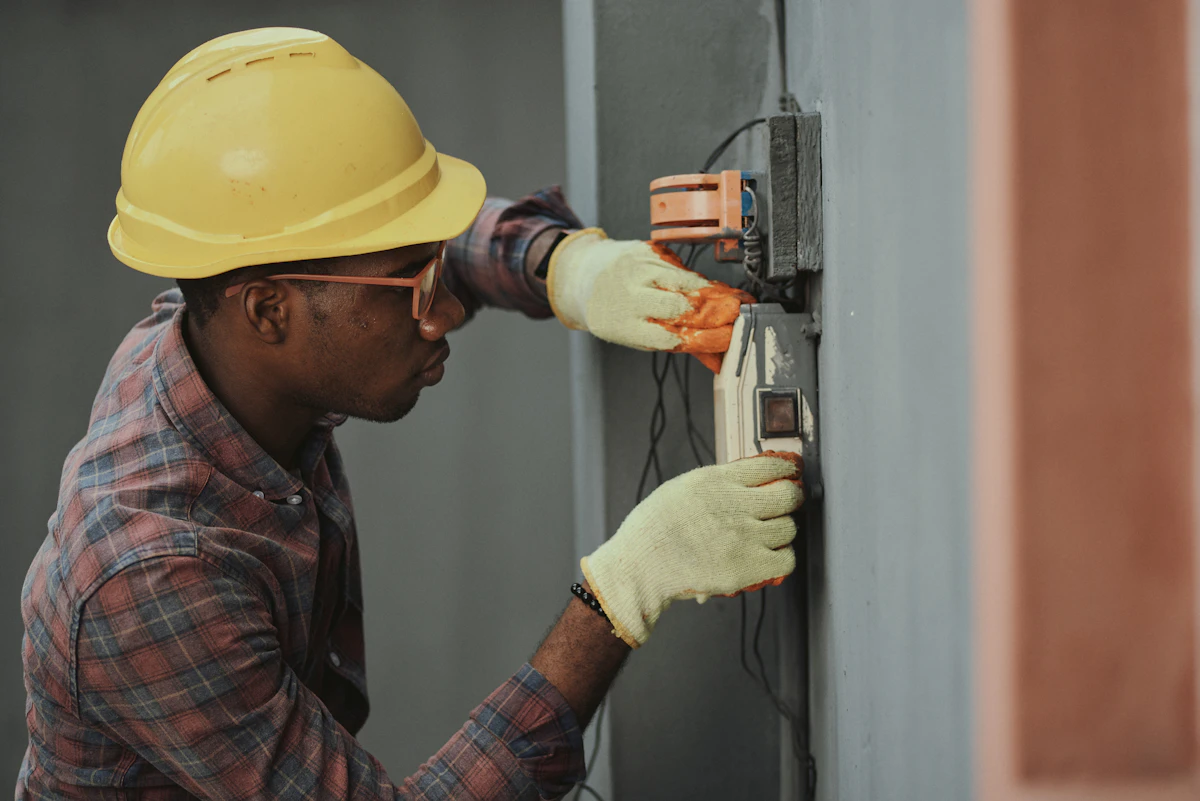
Figure 4: Heavy-duty 120V/240V split-phase inverter installation with integrated generator bypass transfer switch.
Engineering Solutions for High-Surge Loads:
- Low-Frequency Inverters with Toroidal Transformers: Low-frequency inverters (such as Schneider Electric Conext XW Pro or Victron MultiPlus-II) feature heavy copper toroidal transformers that can sustain 200% to 300% surge overload for 5 to 10 full seconds. In contrast, lightweight high-frequency electronic inverters can typically sustain surge for only 20 to 50 milliseconds before shutting down.
- Solid-State Soft Starters: Installing an electronic soft starter (such as a Micro-Air EasyStart or Hyper Engineering SureStart) ramps motor voltage gradually over 100 milliseconds, reducing peak inrush surge by 60% to 70%. A 1/2 HP well pump that normally spikes to 5,000W can be softened to a manageable 1,800W starting surge.
- Split-Phase Output (120V/240V): Most homestead well pumps and electric clothes dryers require 240V split-phase service (two 120V hot legs 180 degrees out of phase). Ensure your inverter natively provides split-phase output or install two identical 120V inverters stacked in parallel with a master-slave communication cable.
6. Backup Generator Integration & Auto-Generator-Start (AGS)
In off-grid design, attempting to build a solar array and battery bank capable of surviving 7 to 10 consecutive days of freezing blizzard conditions with zero sunlight is economically irrational. Sizing for the absolute worst 1% weather event will quadruple your battery budget.
The engineered solution is to pair a reasonably sized solar battery system (sized for 2.0 to 2.5 days of normal winter conditions) with a fuel-efficient backup generator.
Recommended Generator Sizing = Inverter Continuous Output (kW) × 1.25 to 1.50For a 5 kW off-grid inverter system, select a 6.5 kW to 8.0 kW continuous rated inverter generator with low Total Harmonic Distortion (THD < 3%). Dirty electricity from cheap open-frame construction generators will often be rejected by sensitive inverter battery chargers.
Optimizing Auto-Generator-Start (AGS) Parameters:
Modern off-grid hybrid inverters feature programmable relay contacts that automatically crank the generator when batteries drop low, and shut it down once the bank is replenished:
- Trigger Start Condition: Triggered when Battery State of Charge (SoC) drops below 20%, or when battery voltage rests below 48.0V DC for 15 consecutive minutes.
- Quiet Hours Lockout: Program the AGS to never crank between 10:00 PM and 7:00 AM, preserving peace and quiet overnight unless battery voltage reaches critical low-voltage disconnect (LVD).
- The Bulk Charging Strategy: Run the generator only during the Bulk charging phase (from 20% SoC up to 80% SoC). During Bulk mode, the battery absorbs maximum generator current (often 50A to 80A continuous DC), maximizing fuel efficiency. Once the battery reaches 80% SoC, shut the generator down and allow morning solar to handle the slow, lower-efficiency Absorption and Float finishing phases.
7. Cold Weather LiFePO4 Chemistry & Low-Temperature Protection
Lithium Iron Phosphate (LiFePO4) has revolutionized off-grid power with its 6,000+ cycle lifespan and 90%+ usable depth of discharge. However, lithium chemistry possesses one critical thermal limitation: LiFePO4 batteries must NEVER be charged below 0°C (32°F).
The Physics of Lithium Plating:
When a charging current is forced into a lithium cell below freezing temperatures, lithium ions cannot penetrate the graphite anode fast enough. Instead, the ions accumulate on the surface of the anode as pure metallic lithium.
This process, known as lithium plating, permanently degrades battery capacity, increases internal cell resistance, and can form microscopic metallic dendrites that puncture the separator, causing catastrophic internal short circuits.
How to Protect Your Battery Bank in Freezing Climates:
- Low-Temperature Cutoff BMS: Never purchase off-grid lithium batteries without an internal Battery Management System (BMS) equipped with calibrated temperature thermistors. The BMS must automatically disconnect the charge circuit whenever cell temperature drops below 0°C (32°F), while continuing to allow safe discharge down to -20°C (-4°F).
- Internally Heated Battery Modules: Premium server-rack batteries (such as EG4 LifePower4 Heated or SOK Heated) incorporate internal silicone heating pads. When incoming solar power is detected in freezing weather, the controller routes the first 50 to 100 watts of solar power to warm the internal heating pads until cell temperature reaches 5°C (41°F), after which standard charging commences automatically.
- Conditioned Power Shed Enclosures: Build your battery enclosure inside an insulated, temperature-buffered space. Insulating an outbuilding with R-13 to R-20 rigid foam board and positioning it adjacent to the waste heat generated by the inverter and charge controllers maintains a stable 10°C to 25°C (50°F to 77°F) operating environment year-round.
8. Off-Grid Sizing Benchmark Matrix: 4 Comprehensive Profiles
| System Tier | Daily Consumption | Solar Array (400W) | LiFePO4 Battery Bank | Inverter Capacity | System Voltage | Backup Generator |
|---|---|---|---|---|---|---|
| Camper Van / Tiny Cabin | 1.5 kWh/day | 800W (2 Panels) | 2.56 kWh (200Ah) | 2,000W Pure Sine | 12V DC | Portable 2,000W Inverter |
| Weekend Hunting Cabin | 4.5 kWh/day | 2.4 kW (6 Panels) | 10.2 kWh (200Ah) | 5,000W Pure Sine | 48V DC | 5,000W Dual-Fuel |
| Full-Time 3-Bed Homestead | 12.0 kWh/day | 6.4 kW (16 Panels) | 25.6 kWh (500Ah) | 8,000W Split-Phase | 48V DC | 8,500W Standby Generator |
| Remote Farm / Workshop + Well | 22.0 kWh/day | 12.0 kW (30 Panels) | 40.9 kWh (800Ah) | 12,000W Split-Phase | 48V DC | 14 kW Commercial Diesel / LPG |
9. Summary Engineering Checklist
Before purchasing any off-grid hardware, verify your design against this engineering checklist:
- Calculate watt-hours, not just watts: Total daily kWh multiplied by days of autonomy determines battery capacity.
- Design around 48V DC: Avoid 12V or 24V architectures for systems exceeding 2 kW to prevent excessive conductor sizing and copper I²R heating losses.
- Size array for December insolation: Use your local winter solstice Peak Sun Hours (typically 2.0 to 3.0 PSH in continental climates).
- Account for motor surge currents: Verify that your inverter can supply 5-second surge amperage for well pumps and refrigeration compressors.
- Protect lithium from sub-freezing charging: Ensure your battery enclosure is insulated and equipped with low-temperature charging lockout thermistors.
Interactive Off-Grid Sizing Tools
Model your off-grid system with our specialized engineering calculators:
- 🏕️ Off-Grid Solar Calculator — Full load audit, autonomy days, and battery bank sizing.
- 🔋 Solar Battery Size Calculator — In-depth lithium Ah and kWh conversion.
- ⚡ Solar Inverter Size Calculator — Motor surge and continuous wattage matching.
- 📐 Solar Panel Quantity Calculator — Exact panel counts based on winter solar irradiance.
Ready to size your own system?
Use our free universal solar calculator to run exact calculations.